
What Do Veneers Fix? Five Smile Concerns One Thin Layer of Porcelain Can Solve
By The Smile Bar team ·
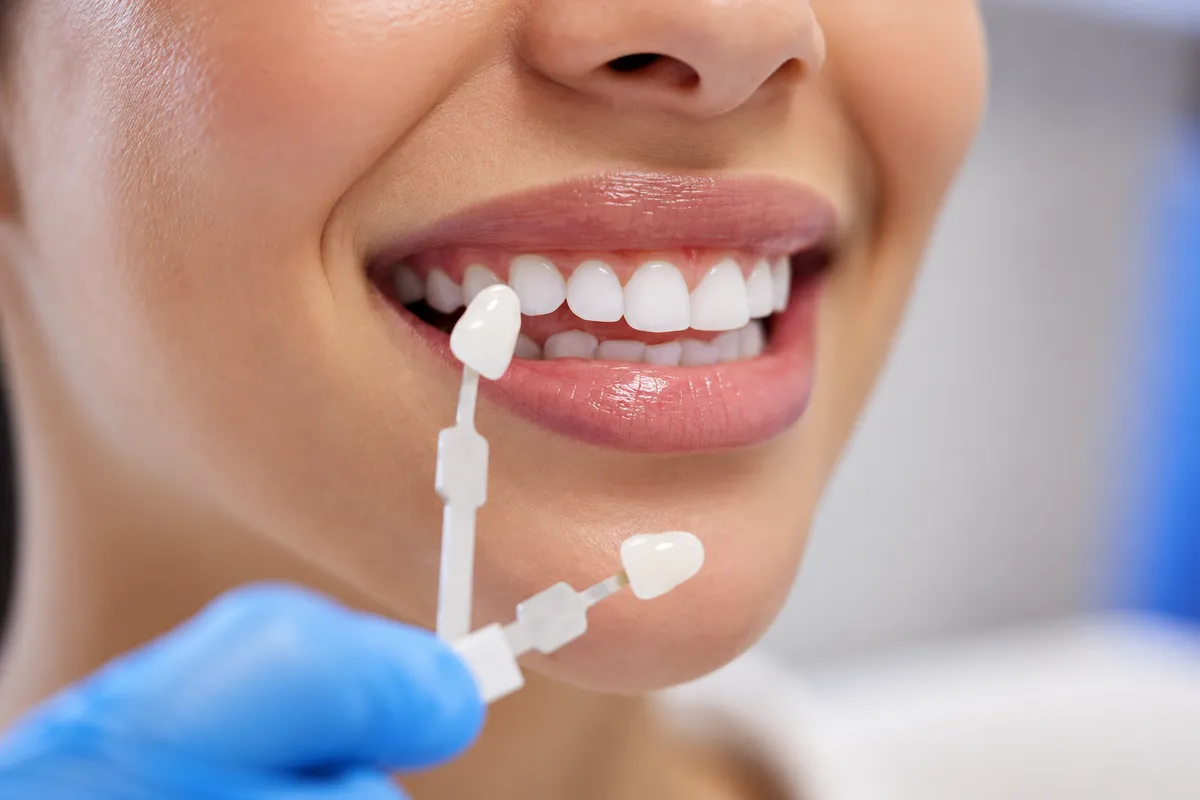
Porcelain veneers fix five common cosmetic concerns: chipped or cracked teeth, small gaps, deep discoloration that whitening can't lift, worn or uneven edges, and minor misalignment. A veneer is a thin layer of porcelain fitted over the front of a tooth — much like a fingernail fits over a finger — which is why one conservative treatment can solve several problems at once.
Here's how porcelain veneers at The Smile Bar address each concern, and how to tell when a different treatment would serve you better.
Quick facts about porcelain veneers
- A veneer is a thin porcelain layer bonded over the front surface of a tooth.
- The full process at our office typically takes around three weeks.
- Temporary veneers give you a real preview of the final result before anything is permanent.
- Porcelain resists staining better than natural enamel.
- Care is the same as natural teeth: brushing, flossing, regular hygiene visits.
- Veneers are not reversible, so the consultation and preview stages matter. Results vary by case.
Which smile concerns can veneers correct?
Chipped or cracked teeth
A chip changes how a tooth catches light, and even a small one can dominate how you feel about your smile. Veneers restore the tooth's full silhouette with porcelain shaped to match its neighbors — rebuilding the edge, masking the crack line, and returning a smooth surface that makes eating and speaking easier. For a very small chip on an otherwise healthy tooth, dental bonding can be a simpler alternative; your consultation compares both honestly.
Gaps between teeth
Small gaps — especially between the front teeth — are one of the classic veneer cases. Slightly wider veneers close the space visually without moving the teeth at all, which is why the result arrives in weeks instead of months. If your spacing is wider or involves several teeth, moving them with clear aligners may be the sounder route. The honest answer depends on measurements, not preference.
Deep discoloration and stains
Professional whitening works well on surface stains, but some discoloration lives deeper — from certain medications, an old root canal, large visible fillings, or enamel that formed unevenly. Whitening can't reach those. Veneers mask deep discoloration completely, and because porcelain resists staining, the shade you choose is the shade that stays. The American Dental Association's consumer resource MouthHealthy.org covers why some stains respond to bleaching and others don't.
Worn or uneven edges
Years of grinding, clenching, or simple wear can flatten the biting edges of front teeth, making a smile read older than it is. Veneers restore the natural length and contour of worn teeth, rebuilding the gentle unevenness that young, healthy teeth actually have. If grinding caused the wear, we'll also talk about protecting your investment — treating the symptom without the cause is a short-lived fix.
Minor misalignment
A single tooth that sits slightly rotated or a front row that's a little uneven can sometimes be corrected visually with veneers — often called "instant orthodontics." It suits small corrections where the bite itself is healthy. For genuine crowding or bite problems, aligners or braces treat the cause rather than covering it; our guide to what clear aligners can correct explains where that line falls.
How does the veneer process work?
Health comes first: veneers need a sound tooth underneath, and untreated problems are common — the CDC reports that about 1 in 4 American adults has untreated tooth decay, which is why a thorough exam precedes any cosmetic work.
It starts with a consultation confirming veneers are right for you. A tiny amount of tooth surface is then prepared so each veneer fits properly, and you wear temporary veneers — a working preview of the final result — while adjustments are made. At the final visit each veneer is bonded and polished. The full process typically takes around three weeks. Because preparation removes a small amount of enamel, veneers are not reversible, which is exactly why we walk through every stage before anything begins. For general guidance on keeping any restoration healthy, the National Institute of Dental and Craniofacial Research offers plain-language oral health information.
"Why wait any longer for the smile you've always wanted?"
Are veneers the right fix for your concern?
Sometimes the answer is yes on the spot; sometimes bonding, whitening, or aligners will do the same job more conservatively. That's what the consultation is for — a conversation with Dr. Forbes, an honest comparison of your options, and a clear picture of what your case involves. You can also survey the whole toolkit in our cosmetic dentistry options overview.
Veneer FAQs
Are veneers permanent?
Porcelain veneers are considered irreversible, because a small amount of enamel is prepared so each veneer sits flush against the tooth. With normal brushing, flossing, and regular hygiene visits, they are designed to serve for many years — though longevity varies by patient and habits.
How long does the veneer process take?
At The Smile Bar the full process typically takes around three weeks, including a consultation, gentle preparation, temporary veneers that preview the result, and final bonding and polish.
Will veneers look fake?
Well-made veneers are matched to your smile in shape and shade, and it is normally very difficult to tell the difference between veneers and natural teeth. Reviewing shape and shade together before bonding is part of the process.
Educational content, not a diagnosis. Individual results vary; every treatment plan begins with an in-person consultation.