
"Not enough bone" isn't the end of the story.
Bone shrinks where teeth go missing — it's biology, not bad luck. Bone grafting rebuilds that lost support, turning "you're not a candidate" into a workable implant plan for many patients.
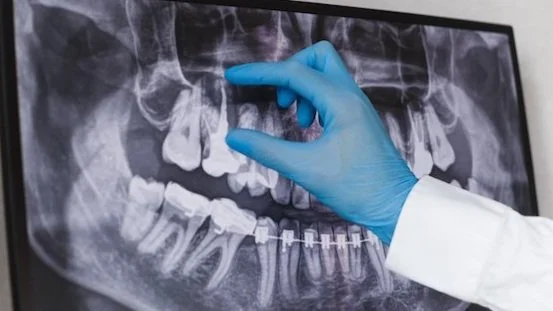
Why bone disappears — and why it matters
After a tooth is removed, the bone that anchored it begins to resorb — losing height and width, while the gum tissue above loses volume and shape. Over time that creates both functional and cosmetic problems, and it's the most common reason patients are told implants aren't possible. Grafting restores the deficient area so a dental implant has the foundation it needs.
Rebuilding lost bone
For patients who've been missing teeth for a while, Dr. Arielle Forbes, DMD employs a variety of grafting options to restore tissues as close as possible to their previous form.
Learn morePreserving bone proactively
At the time of extraction, bioengineered graft material placed in the socket supports new bone growth — greatly reducing, or even eliminating, the usual bone and gum loss.
Learn moreWhat the process looks like
- Free consultation with Dr. Arielle Forbes, DMDA customized treatment plan and an exact cost — no surprise fees. A consultation is a conversation, not a commitment.
- The grafting procedurePerformed under local anesthetic, with IV sedation available if you want it. Your options are discussed in depth beforehand so the treatment fits your needs.
- Comfortable healingYou'll go home with antibiotics, pain medication if required, and simple food guidance to protect the graft. Most patients continue normal daily life while it heals.
- Implant placementOnce the grafted bone has fused into robust, living bone, your implant is placed on a foundation built to hold it.
Grafting isn't a detour — it's the foundation being poured before the house goes up.
Bone grafting questions
Why would I need a bone graft?
Dental implants rely on adequate bone for support. After a tooth is lost, the surrounding bone slowly resorbs — shrinking in both height and width, and taking gum volume with it. A graft restores that deficient area, creating implant possibilities that would otherwise be absent.
Does bone grafting hurt?
The procedure is done under local anesthetic, with intravenous sedation available if you want it. Afterward you’ll receive antibiotics and pain medication if needed, and most patients carry on with day-to-day life while the graft heals.
How long until I can get my implant?
Your implant is placed once the grafted bone has fused and become a robust part of your existing bone. The timeline varies by case — Dr. Forbes maps yours at the consultation, so there are no surprises.
Can bone loss be prevented in the first place?
Often, yes. Dr. Forbes takes a proactive stance on bone preservation: placing bioengineered graft material into the socket at the time of extraction supports new bone growth and has been shown to preserve bone and overlying soft tissue after tooth removal.
I was told I don’t have enough bone for implants. Is that final?
Not necessarily. Bone grafting exists precisely for patients who don’t currently have enough bone for implants to be placed safely and securely. It’s worth a second look — the consultation is free.
Find out what your bone can support
Imaging answers what guessing can't. Your consultation with Dr. Arielle Forbes, DMD is free — and so is the honest assessment. Call 410-874-2222 or book online.
Book your free consultation