
The Preventive Care Guide: What a Checkup Really Covers and How Often You Need One
By The Smile Bar team ·
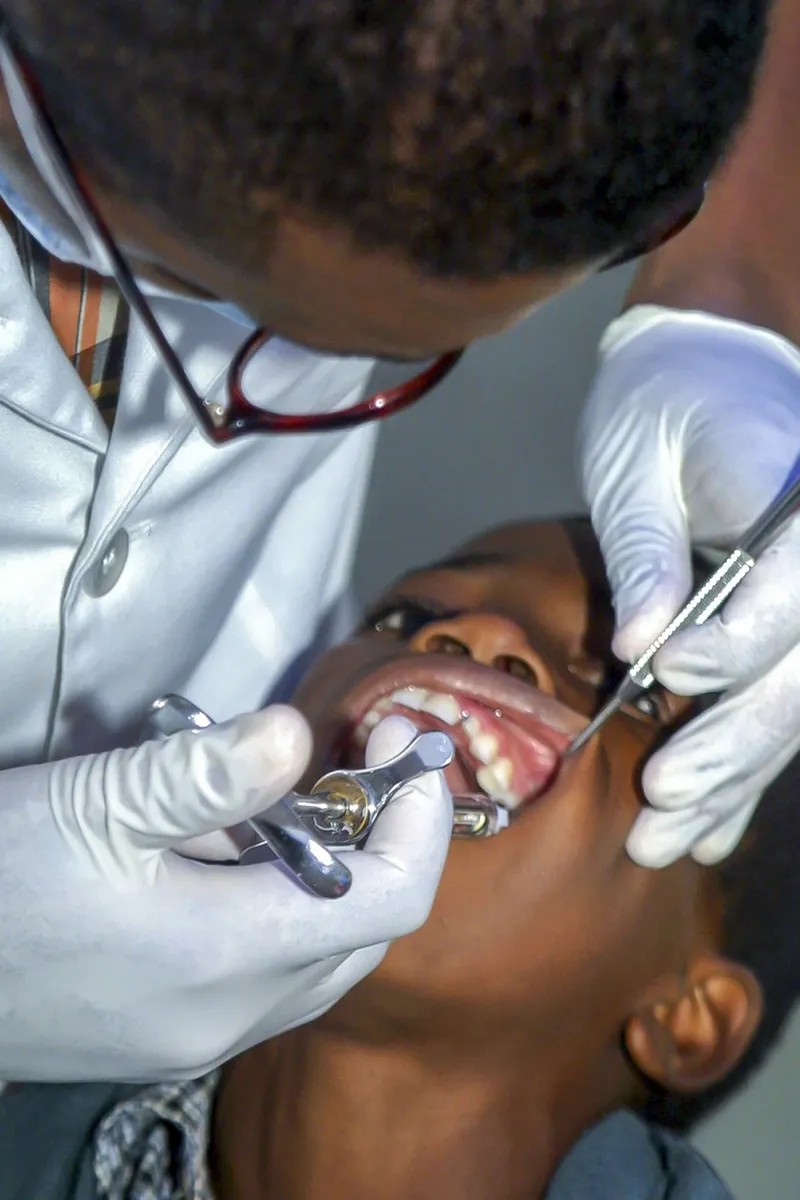
Preventive dental care means a professional cleaning and exam — typically every six months — plus periodic X-rays, a gum evaluation, and an oral cancer screening. The goal is simple economics: the easiest dental problems to fix are the ones caught early, while they're still small and inexpensive.
Here's what actually happens at a prevention visit at The Smile Bar, why each step exists, and how often the pieces recur.
Quick facts about preventive care
- Most patients do well with a cleaning and exam every six months; your dentist may adjust the cadence.
- Plaque you miss hardens into tartar, which cannot be removed at home.
- X-rays reveal what the eye can't: bone loss, abscesses, and hidden decay.
- An oral cancer screening is part of every routine exam and takes minutes.
- Fluoride treatments may be recommended every three, six, or twelve months.
- Daily brushing and flossing do the work between visits — the checkup verifies it.
What happens at a preventive visit?
Cleaning and polishing
Even excellent brushers miss spots, and plaque that stays put hardens into tartar — which no toothbrush can remove. Professional cleaning clears both from above and just below the gum line before they cause inflammation, then polishing removes surface stains. The stakes are ordinary and real: according to the Centers for Disease Control and Prevention, about 1 in 4 American adults has untreated tooth decay, and regular professional care is among the core habits that prevent cavities and gum disease. If it's been years rather than months, don't be embarrassed — be scheduled.
Gum evaluation
Your gums and the bone beneath your teeth are checked carefully for developing disease. Gum disease progresses quietly — often with so little discomfort that patients don't notice until it's advanced — so measurement, not sensation, is how it gets caught. If you already have symptoms like bleeding or recession, our guide to gum disease signs and treatment covers what they mean.
Oral cancer screening
A check of your mouth, tongue, throat, gums, and neck for early warning signs is built into every routine exam. It takes minutes, requires nothing from you, and exists because early detection meaningfully changes outcomes. For most people this screening happens nowhere else in their healthcare year — one of the quieter arguments for keeping the six-month rhythm.
X-rays
X-rays reveal what the eye can't: bone loss, abscesses, decay between teeth, and teeth in the wrong position. A new patient typically receives a complete set to establish a baseline; after that, X-rays are taken periodically based on your risk and history rather than a fixed universal schedule. The American Dental Association guidance is that imaging frequency should follow individual need — which is exactly how we prescribe it.
Existing dental work check
Fillings, crowns, bridges, and implants don't maintain themselves. Each visit, your existing work is examined for damage, wear, and the small gaps where decay likes to restart. Catching a failing filling early usually means a simple replacement; catching it late can mean a crown or worse. This is prevention's least glamorous step and one of its most valuable.
A plan of action
Findings are evaluated and turned into a clear plan, so nothing gets left to chance between visits. Sometimes the plan is "see you in six months." Sometimes it's a watch-list, a fluoride recommendation, sealants for cavity-prone grooves, or a conversation about treatment worth doing sooner rather than later — with the reasoning explained, not assumed.
"We want to partner with you to ensure that you can enjoy a lifetime of good oral health."
How often should each piece happen?
The working rhythm for most patients: cleaning and exam every six months, a gum evaluation and oral cancer screening at each of those visits, X-rays periodically per your dentist's recommendation, and fluoride — if recommended — every three, six, or twelve months. Sealants, most often applied to children's permanent teeth, typically last three to five years — and the CDC reports that sealants prevent about 80% of cavities in back teeth for two years after application. Between visits, the National Institute of Dental and Craniofacial Research basics apply: brush twice daily with fluoride toothpaste, floss daily, and limit sugary drinks.
Due — or overdue?
A cleaning and exam is the simplest thing you can do for your smile this year, and the cheapest problem you'll ever fix is the one that gets caught at a checkup.
Preventive care FAQs
How often should I get a dental cleaning?
For most patients, a professional cleaning and exam every six months is the standard rhythm. Some situations — a history of gum disease, certain medical conditions, heavy tartar buildup — call for more frequent visits. Your dentist sets the cadence that fits your mouth.
How often are dental X-rays needed?
It varies with your risk and history. A new patient typically gets a complete set to establish a baseline; after that, X-rays are taken periodically based on your dentist’s recommendation rather than on a fixed universal schedule.
Why does a checkup include an oral cancer screening?
Because early detection changes outcomes, and the screening takes only minutes. Your mouth, tongue, throat, gums, and neck are checked for early warning signs as a routine part of every prevention visit.
Educational content, not personal medical advice. The right visit cadence varies by individual — your dentist sets yours at an in-person exam.